
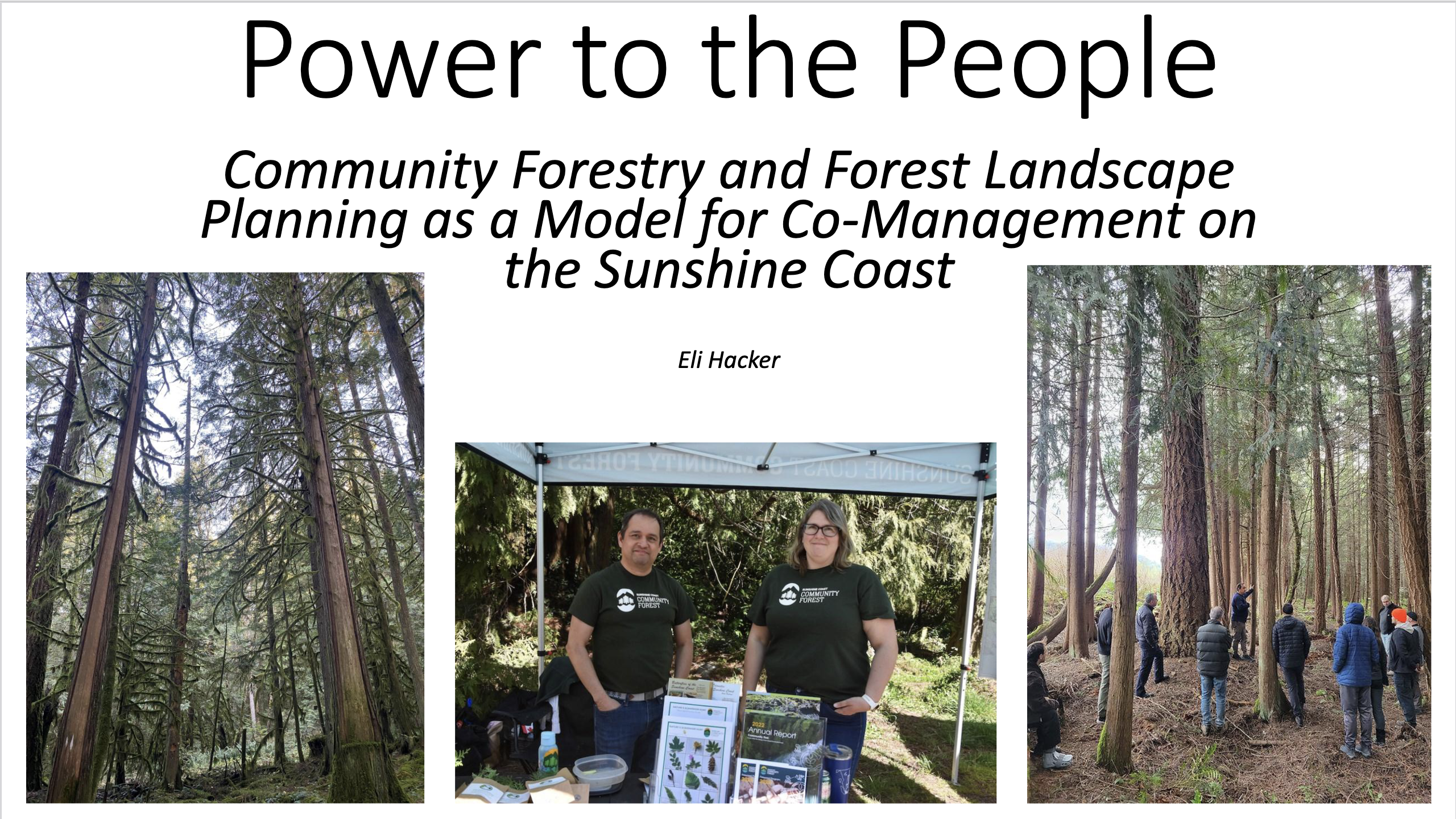
Power to the People: Community Forestry and Forest Landscape Planning as a Model for Co-Management on the Sunshine Coast
Article Sidebar
Main Article Content
Abstract
In light of British Columbia (BC)’s Declaration on the Rights of Indigenous Peoples Act (DRIPA), all policies in BC must respect the United Nations Declaration on the Rights of Indigenous Peoples. In line with DRIPA, BC’s new forest landscape management strategies now require consent from local First Nations. At the same time, the community forestry model is expanding to assert local decision-making power on crown land and to retain the economic benefits of forest resources within communities. This study examines how these policies are evolving and intersecting by examining a local case study of collaboration and consultation between the province, the Sunshine Coast Community Forest, and the shíshálh First Nation. By employing a mix of qualitative and Indigenist research methods, this research will analyse the current policy environment and consult with key community stakeholders through conversations and surveys to understand the successes and shortcomings of the consultation process. This research focuses on the Sunshine Coast because of the successful collaboration between the Community Forest and shíshálh Nation. As community forests and the forest landscape planning process expand, it is critical to understand what has driven success so that other jurisdictions can incorporate these best practices into their own forest planning process. In the face of increasing outside demands on Indigenous Nations, heightened volatility in BC’s forestry industry, and mounting scrutiny of DRIPA, this research seeks to support Indigenous Nations and to answer a critical question: How can BC create collaborative policy pathways for meaningful engagement, self-determination, and sustainable resource management?
Article Details

This work is licensed under a Creative Commons Attribution-NonCommercial-NoDerivatives 4.0 International License.