
How to do Things with Graffiti: A Rhetorical Speech Act Analysis
Article Sidebar
Main Article Content
Abstract
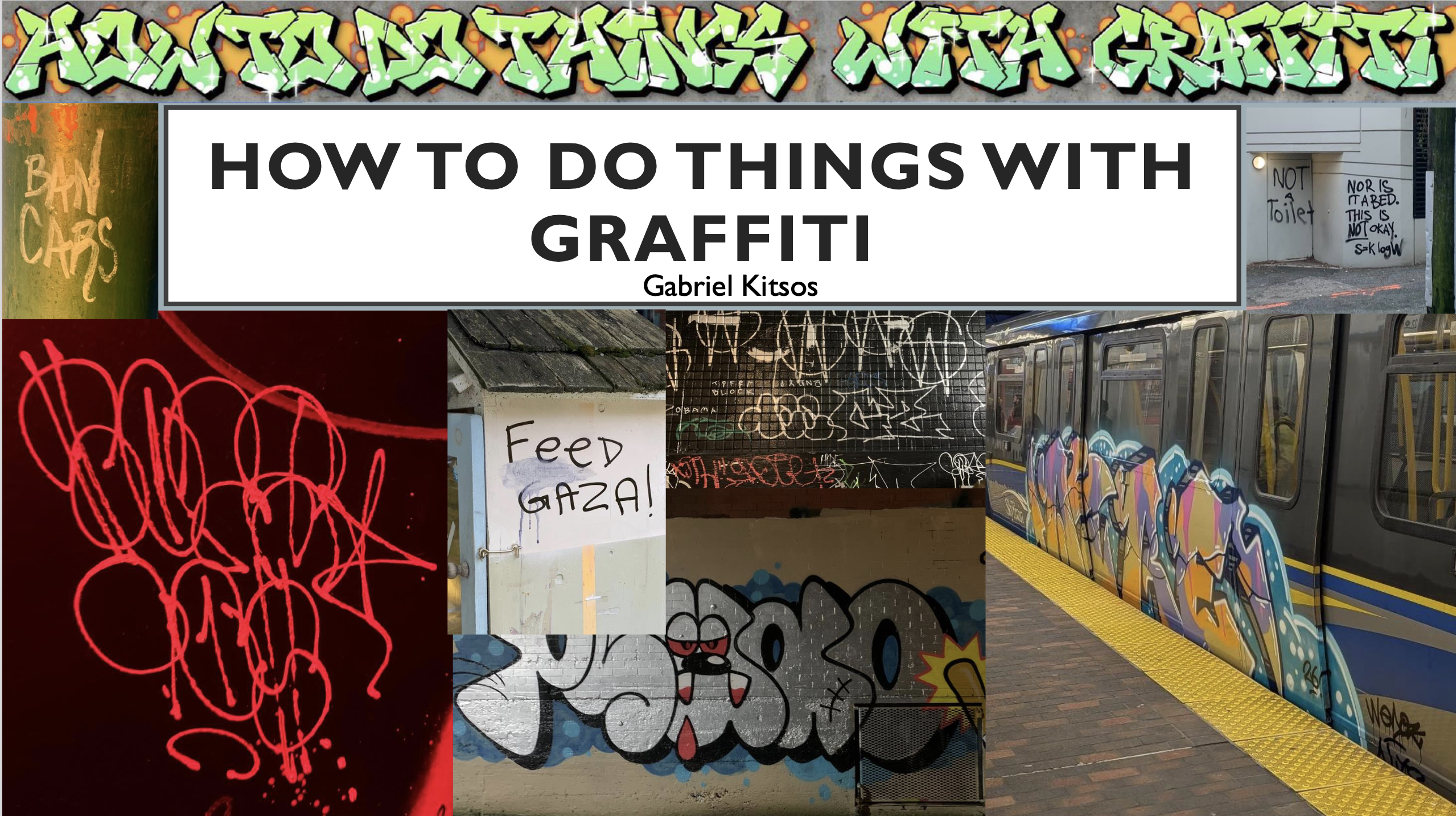
In academia, current conceptions of graffiti are hazy because: 1) When people talk and write about graffiti, they are often conflating multiple different types, including gang graffiti, street art, political graffiti, etc. and 2) Past analyses often lack a rhetorical approach that is grounded in a writer’s illocutionary intent—in other words, what the writer intends for their work to do. This research addresses the first issue by focusing on two types of graffiti: Hip-Hop and hortatory. To amend the second issue, this analysis employs a speech-act framework—which means that instances of graffiti are viewed as utterances which an author uses to try to achieve certain goals. Further, these graffiti utterances are evaluated for their use of rhetoric (techniques for efficacy). This project introduces the term “guerilla literature” as a way of conceptualizing graffiti and its potential for efficacy. Graffiti is literature in the sense that it is writing that attempts artistic merit. It is unlike literature in all the ways in which it is a guerilla act: short, quick, and to immediate effect, covert, anonymous, accessible, spatially embodied and spontaneous.
Article Details

This work is licensed under a Creative Commons Attribution-NonCommercial-NoDerivatives 4.0 International License.