“You Need to Learn with Experience”: Parent-Child Conversations and Ethical Generative AI Use
Article Sidebar
Main Article Content
Abstract
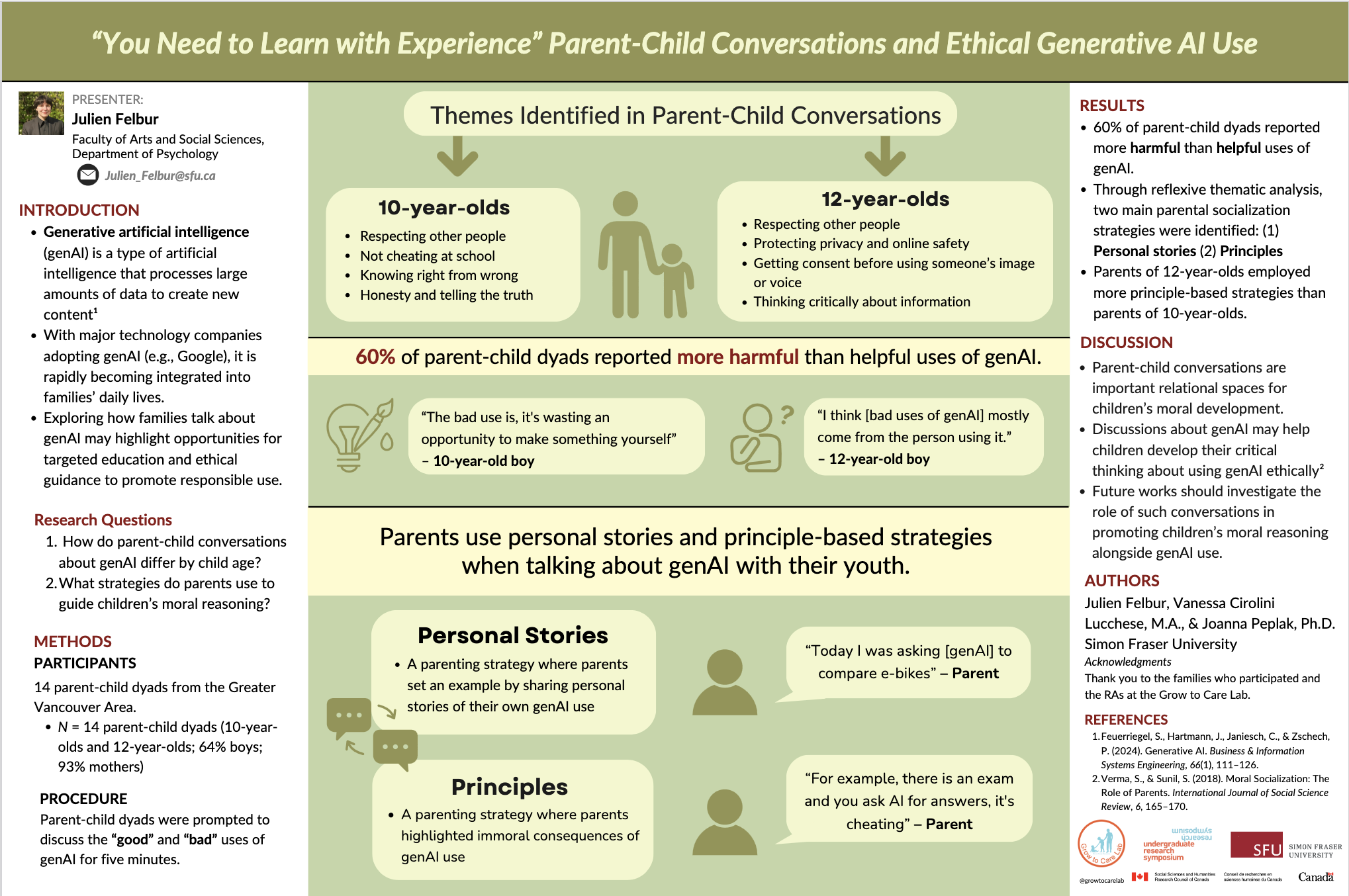
Generative artificial intelligence (genAI) is a type of artificial intelligence that processes large amounts of data to create new content. With major technology companies adopting genAI (e.g., Google), it is rapidly becoming integrated into families’ daily lives. Thus, families’ understanding of genAI may highlight opportunities for targeted education and ethical guidance to promote responsible use. The current study explores parent-child conversations about the positive and negative uses of genAI, and the socialization strategies parents use during these conversations. Participants included 14 parent-child dyads (n = 7 10-year-olds and n = 7 12-year-olds; 64% boys; 93% mothers, Mage = 43.70 years, SD = 4.98) from the Greater Vancouver Area. Parent-child dyads were prompted to discuss the “good” and “bad” uses of genAI in any way they wanted for 5 minutes. Thematic analysis revealed that 60% of uses reported were more harmful (e.g., cheating on homework) than helpful (e.g., creating new recipes). Next, two main parental socialization strategies were identified: modeling (i.e., discussing personal stories genAI use; “today I was asking [genAI to] compare e-bikes”) and principle-based (i.e., highlighting moral consequences of uses; e.g., “[genAI can be used to] take someone's picture and do something unkind or untruthful”). Parents of 12-year-olds employed more principle-based strategies than parents of 10-year-olds. Findings highlight that parents and children use genAI in multifaceted ways. Parent-child conversations may be crucial contexts for fostering children’s moral development alongside genAI use and future works should investigate their role in promoting children’s moral and critical thinking.
Article Details

This work is licensed under a Creative Commons Attribution-NonCommercial-NoDerivatives 4.0 International License.