
The Effect of Varying Diagnostic Terminology Within Questionnaires on Mild Traumatic Brain Injury Symptom Reporting
Article Sidebar
Main Article Content
Abstract
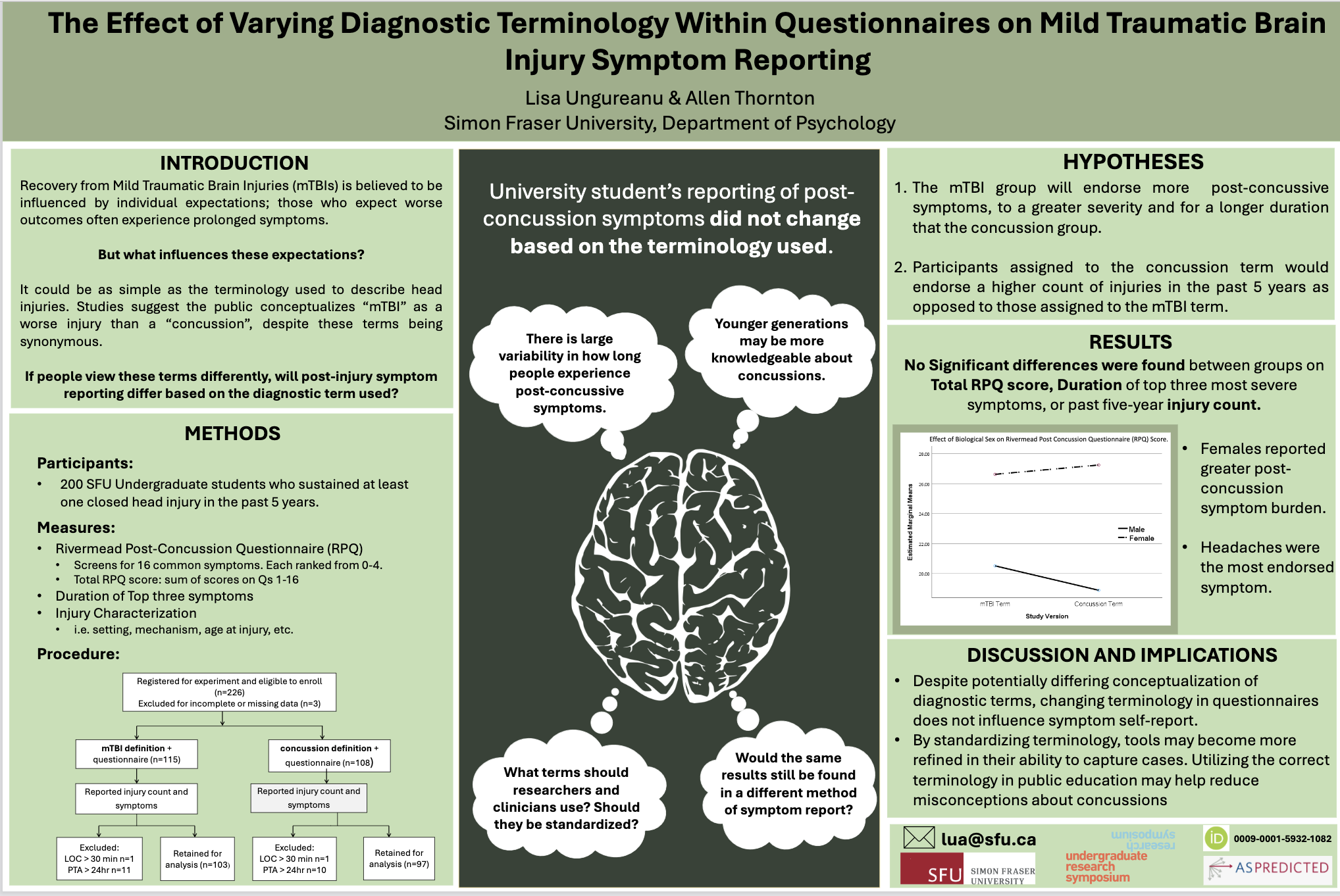
Recovery from mild closed head injury is in part influenced by expectations. Persons expecting worse outcomes often experience symptom prolongation. Studies suggest that the public views “mTBI” as a more serious injury, with worse outcomes, than a “concussion”. Such differences in terminology might influence symptom reporting in persons recovering from an injury. We hypothesized that participants who are queried using the term “mTBI” will report more symptoms of higher severity and of longer duration than those queried with the term “concussion”. In exchange for course credit, university students reporting a past closed head injury were randomly assigned to a questionnaire that used either “concussion” or “mTBI”. Participants reported the amount, severity, and duration of symptoms they experienced following their most recent injury. Following completion of data collection, comparisons will be made between the two groups using independent samples t-tests. Characterizing how symptom reporting differs due to the influence of terminology can inform diagnostic procedures and contribute to increasing the quality of measures used. Furthermore, understanding how the public interprets medical terminology can inform the strategies used to disseminate information.
Article Details

This work is licensed under a Creative Commons Attribution-NonCommercial-NoDerivatives 4.0 International License.