
Healthy Children, Healthy Communities: Co-Benefits of Children's Action on Climate Change and Mental Health
Article Sidebar
Main Article Content
Abstract
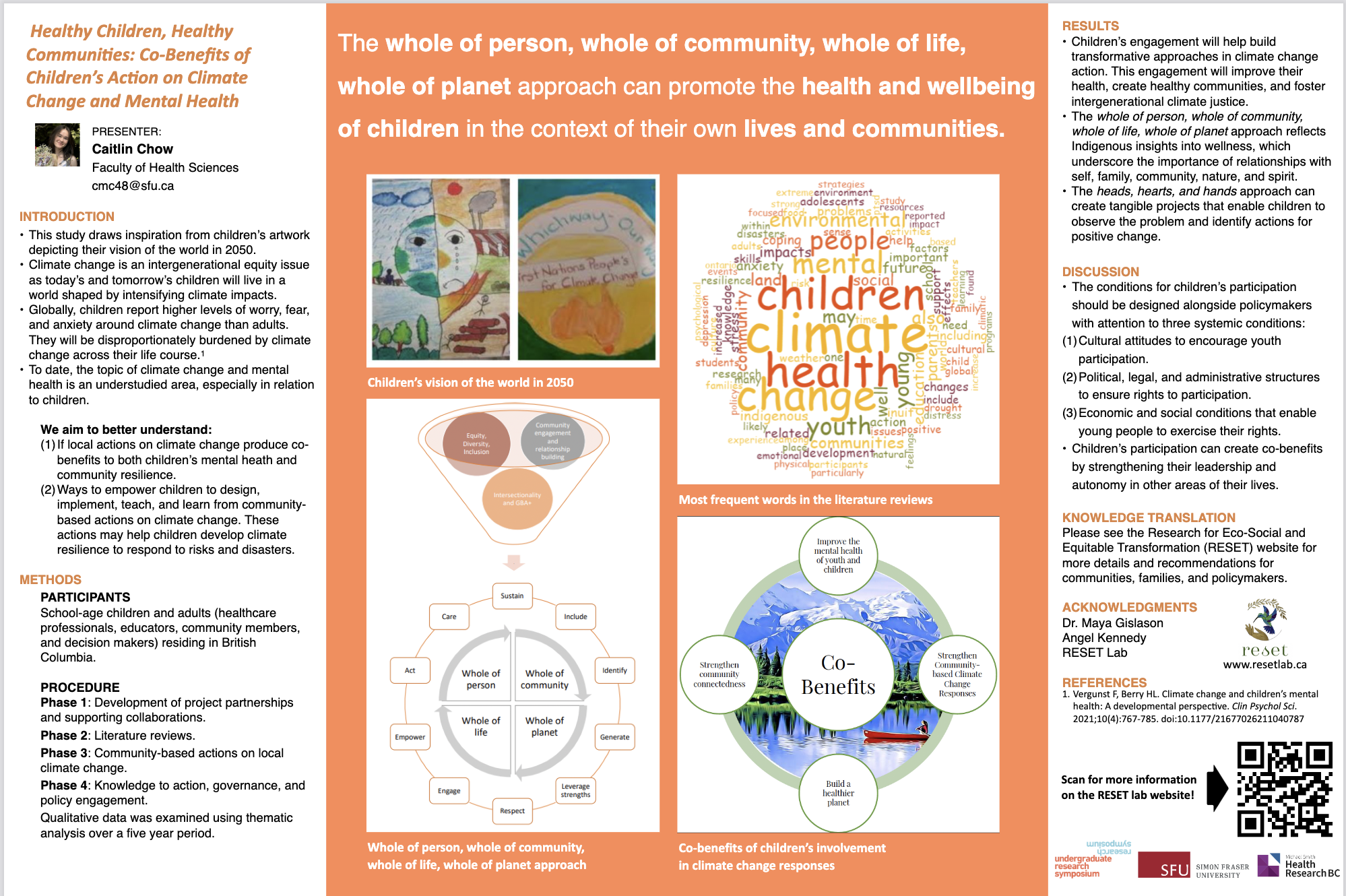
Globally, climate change amplifies children’s deteriorating mental health, yet this topic remains understudied and children are excluded from contributing to policy actions. Working from the position that children are experts in their own lives, this study explores the impacts of climate change on children’s mental health and how children’s involvement in local climate change actions can promote their mental health and wellbeing. This study uses a four-phase research design consisting of project partnerships, a literature review, community-based actions, and policy building. The study employed an exploratory mixed-methods approach to understand how children’s participation in projects influenced their mental health by measuring participants’ mental health at baseline and after the intervention, alongside qualitative interviews. The study proposes that child-led initiatives can produce benefits for children’s mental health and community resilience. The RESET team is completing phases 1-3, and phase 4 is a Knowledge to Action project underway that will use the study findings to produce deliverables for the policy sector. The phase 4 research question asks, what do children want policymakers in their communities to know and do? Project groups and intersectoral collaborators will identify opportunities for local or regional policy change and areas for further research. The poster will present how the project evolved over time and offer recommendations for governance activities, policy-relevant material, and building climate resilience to respond to risks and disasters in the hopes of producing a sense of accomplishment among children and positively impacting their mental health and wellbeing.
Article Details

This work is licensed under a Creative Commons Attribution-NonCommercial-NoDerivatives 4.0 International License.