
How Acceptance & Rumination Support Students’ Emotional Well-being: A daily diary study
Article Sidebar
Main Article Content
Abstract
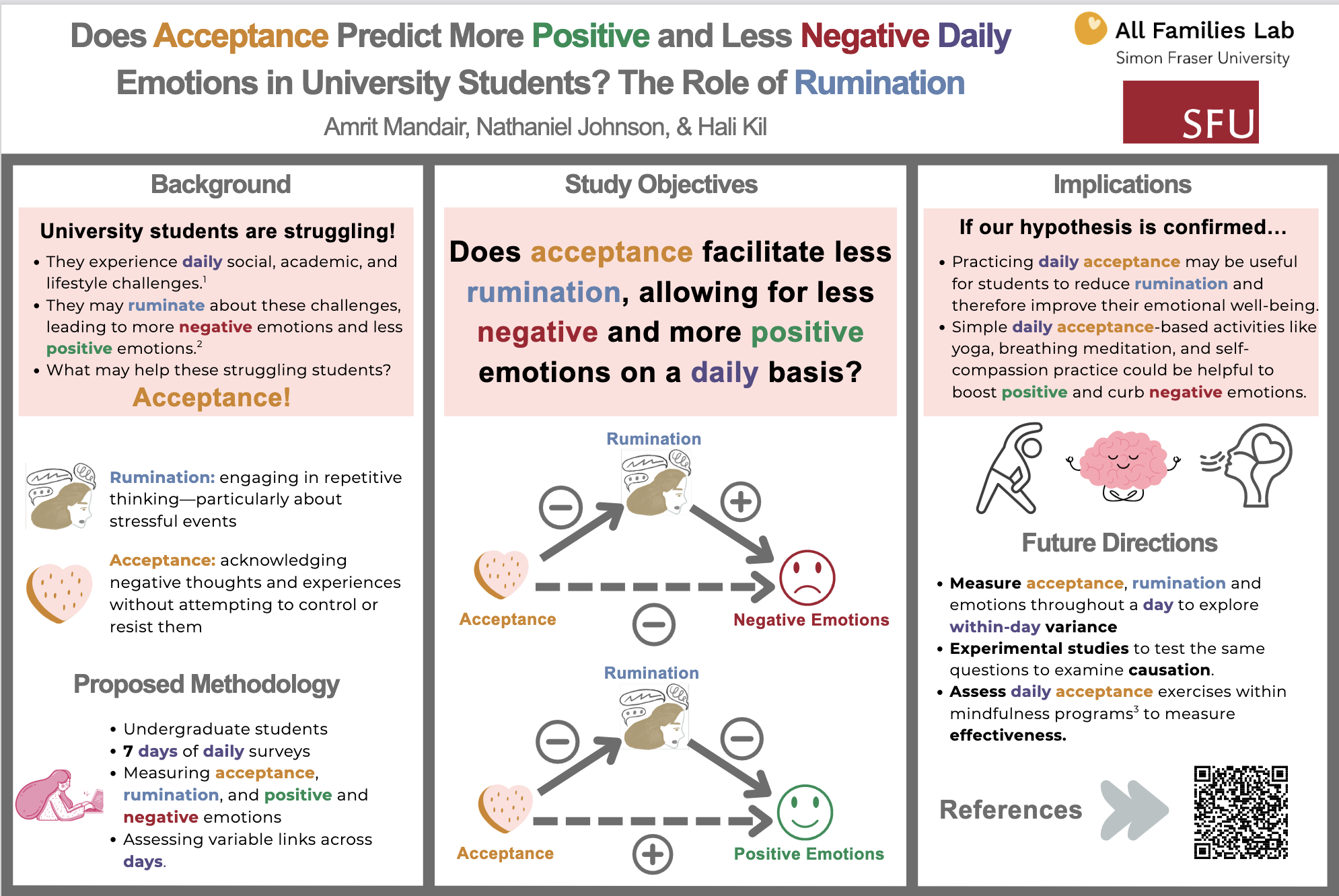
University can be a time of major change for many students as they experience a range of social, academic, and lifestyle challenges that vary from day to day. The World Health Organization reported that in 2018, over 30% of university students across eight countries, including North America, scored positive for a substance, mood or anxiety disorder. One cognitive symptom of such disorders is rumination—i.e., engaging in repetitive thinking—about stressful events, which is linked to more negative and less positive emotions. What may help to buffer against rumination and promote emotional well-being? Psychology research suggests that acceptance may be helpful. Acceptance is defined as acknowledging negative thoughts and experiences without attempting to control or resist them. In this study, we will examine the links between acceptance, rumination, and negative and positive emotions on a daily basis. Undergraduate students will be recruited through the psychology research pool to complete daily surveys assessing acceptance, rumination, and emotions across seven consecutive days. Using multilevel modeling, we will test our hypothesis that acceptance is linked to more positive and less negative daily emotions via less rumination as the mediator, on a day-to-day basis. Findings will have important implications for university students’ emotional well-being, potentially highlighting acceptance as a protective practice. Importantly, our results will emphasize the daily changing nature of challenging and stressful events in students’ lives and the importance of cognitive change practices, such as mindful acceptance, on student well-being.
Article Details

This work is licensed under a Creative Commons Attribution-NonCommercial-NoDerivatives 4.0 International License.